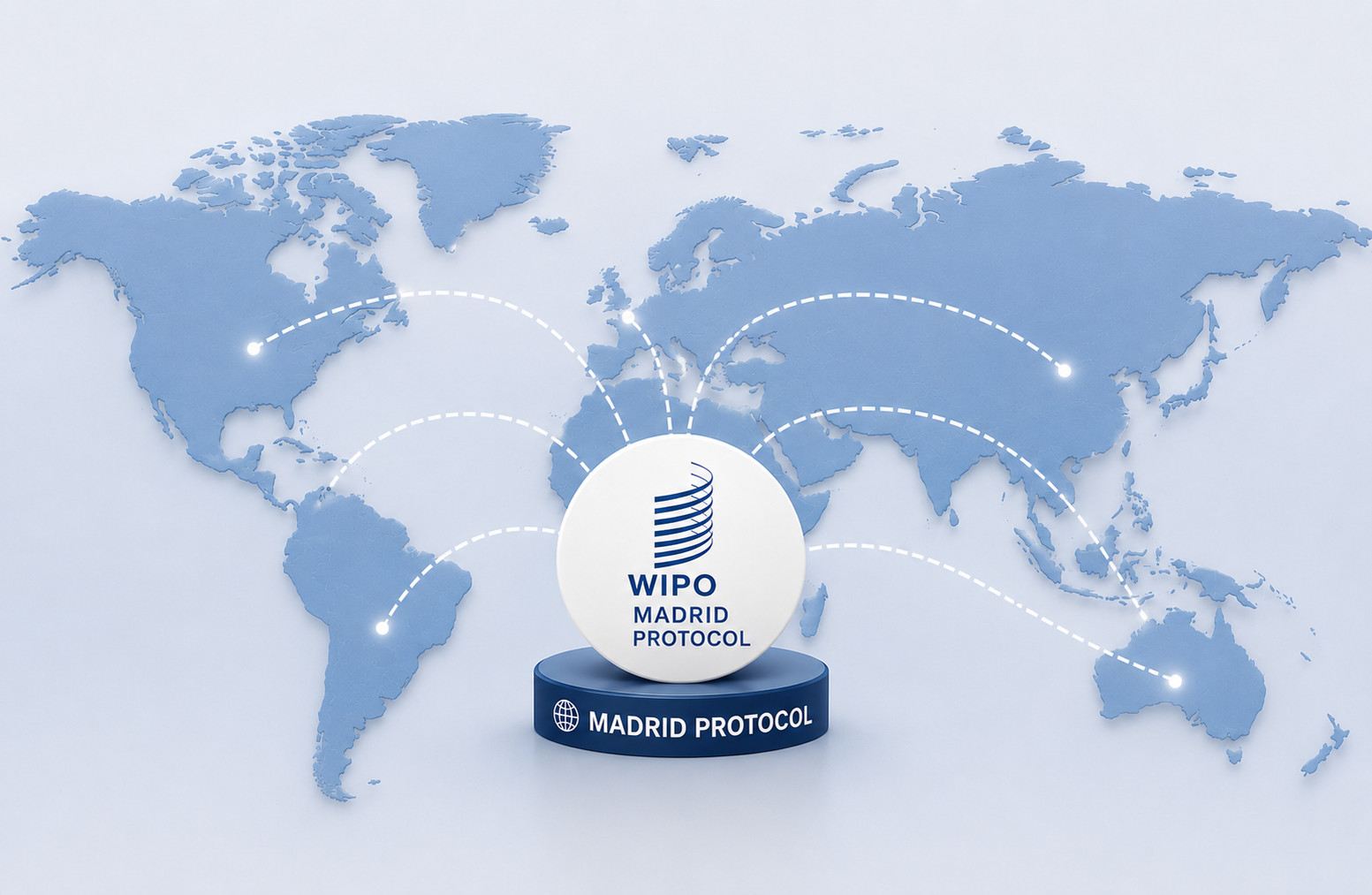
There is no doubt that the Madrid System provides an efficient mechanism for trademark owners seeking protection in multiple countries through a centralized international registration process. By filing a single application for international trademark registration through the World Intellectual Property Organization (“WIPO”), an applicant may designate a number of member countries, including Indonesia, without having to first file separate national applications in each country of interest.
Although the Madrid System offers various procedural and administrative advantages, applicants considering Indonesia as a designated country should be aware of a number of legal and practical considerations. Based on preliminary research and professional experience, the following are several key matters that should be taken into account when seeking trademark protection in Indonesia through an international registration under the Madrid System.
1. Dependence on the Basic Mark during the First Five Years
One of the key characteristics of the Madrid System is that an international registration remains dependent on the basic application or registration (the “Basic Mark”) in the applicant’s country of origin during the first five years from the date of the international registration.
During this period, the international registration remains dependent on the status of the Basic Mark. If the basic application or registration is refused, cancelled, withdrawn, or otherwise ceases to be effective, whether in whole or in part, the international registration may likewise be affected to the extent that it corresponds to the basic application or registration.
This aspect becomes particularly important where Indonesia has been designated in the international registration. If the international registration is cancelled as a result of an issue affecting the Basic Mark, the trademark owner may still seek protection in Indonesia through a national application under the transformation mechanism available under the Madrid System, subject to the applicable requirements and deadlines.
Accordingly, the status of the Basic Mark should be carefully maintained and monitored, particularly where there are legal proceedings or other circumstances that may affect its validity or continued effectiveness.
2. National Requirements and the Need for Local Representation (Legal Counsel)
Although the Madrid System provides a centralized filing and administrative mechanism, designating Indonesia does not eliminate the application of Indonesian trademark law and local legal practice.
Each designated country retains the authority to examine an international registration in accordance with its own national laws and procedures. In Indonesia, examination is conducted by the Directorate General of Intellectual Property (“DGIP”) based on the applicable trademark laws and regulations and other relevant provisions.
Accordingly, an international trademark registration designating Indonesia may still be subject to refusal based on the examination standards and practices applicable in Indonesia. The fact that a trademark has obtained an international registration does not, in itself, guarantee that protection will be granted in Indonesia.
If the DGIP issues a provisional refusal against an international trademark registration, the trademark owner may submit a response in accordance with the procedures applicable in Indonesia. In practice, this may require the appointment of an Indonesian trademark consultant or legal counsel to prepare and file the response and to communicate with the relevant authorities.
In other words, the Madrid System may simplify the filing process at the initial stage, but it does not necessarily eliminate the need for local legal assistance in Indonesia if issues arise during substantive examination or subsequent proceedings.
3. Third-Party Opposition and Procedural Considerations
Third-party opposition is another aspect that requires careful consideration.
Under the Madrid System, the examination and protection of an international registration remain subject to the national laws and procedures of each designated country. In Indonesia, third parties may file an opposition against a trademark application in accordance with the applicable Indonesian laws and regulations.
However, where a third party files an opposition against an international trademark registration designating Indonesia, the Directorate General of Intellectual Property (“DGIP”) will not issue a notice to the applicant informing them of such opposition. As a consequence, the applicant is also not given an opportunity to submit a rebuttal to the opposition.
Therefore, trademark owners filing their trademark applications through the Madrid System should consider implementing a monitoring mechanism for trademarks designated to Indonesia, rather than relying solely on the centralized information and data maintained by WIPO.
4. Risks Relating to the Classification and Description of Goods and Services
The Madrid System uses the Nice Classification to classify goods and services. However, the fact that a description of goods or services is consistent with the international classification does not necessarily mean that the description will be accepted without objection in Indonesia.
In Indonesian examination practice, the Trademark Office may issue a provisional refusal where the description of goods or services is considered too broad, insufficiently specific, ambiguous, or inconsistent with applicable national examination practices.
This creates a potential risk for applicants using overly broad descriptions of goods and services when preparing an international application. A description that may be acceptable for international classification purposes may nevertheless be subject to refusal when examined by the DGIP.
Applicants should therefore pay particular attention to the preparation of the description of goods and services before filing an international application designating Indonesia. Where Indonesia represents a strategic market for the applicant, considering Indonesian requirements and examination practices before filing may help identify potential issues at an early stage.
A clear and precise description of goods and services can reduce the risk of a provisional refusal and help minimize additional costs and delays that may arise from an incompatibility between the description and the types of goods and services acceptable under Indonesian practice.
5. Recording Changes and Synchronizing Data in Indonesia
The Madrid System also provides a centralized mechanism for recording changes to the particulars of an applicant or trademark owner in relation to an international registration. Changes to the trademark owner’s name or address, as well as transfers of trademark ownership resulting from an assignment, merger, or similar transaction, may be recorded centrally through the WIPO International Bureau.
Nevertheless, the centralized recording of such changes does not necessarily guarantee that the relevant information will be updated immediately or automatically in the DGIP database. Additional steps may be required to ensure that the information recorded in Indonesia reflects the latest information recorded in the WIPO database.
This issue is particularly relevant to companies with large trademark portfolios or companies undergoing mergers, acquisitions, reorganizations, or other corporate transactions. Maintaining consistency between the information recorded in the WIPO database for an international registration and the information recorded in Indonesia may help minimize administrative uncertainty and potential obstacles in the management or enforcement of trademark rights.
6. Practical Implications for Trademark Owners
The Madrid System remains an important instrument for companies seeking to manage their international trademark portfolios efficiently. Its centralized filing and administrative mechanisms can significantly reduce the administrative burden associated with obtaining trademark protection in multiple countries.
Nevertheless, these benefits should be considered alongside the practical requirements for obtaining and maintaining trademark protection in Indonesia.
In practice, trademark owners considering Indonesia as a designated country should consider taking the following steps:
- Conduct a trademark search in Indonesia before filing, particularly where the trademark or the goods and services to be protected may raise potential issues during substantive examination.
- Carefully review the description of goods and servicesto ensure that it is sufficiently clear, specific, and consistent with the practices applicable in Indonesia.
- Implement a monitoring mechanismfor proceedings in Indonesia, including monitoring for potential provisional refusals and subsequent refusals.
- Engage Indonesian legal counsel or a trademark consultantwhere necessary, particularly where a provisional refusal requires a response to the DGIP.
- Review the trademark records in Indonesiafollowing any changes to the international registration, particularly following an assignment, merger, change of name, or other changes to the owner’s information.
Conclusion
The Madrid System provides significant advantages to trademark owners in managing trademark protection internationally, particularly through its centralized filing and administrative mechanisms. Nevertheless, these advantages should be considered in light of the legal and practical requirements applicable in each designated country, including Indonesia.
Designation of Indonesia through an international registration does not eliminate the substantive and procedural requirements imposed under Indonesian law. Matters relating to the Basic Mark, national examination practices, third-party opposition, descriptions of goods and services, and the recording of changes in ownership or other relevant information may require additional attention and action.
Accordingly, the Madrid System should be viewed as a mechanism that facilitates the process of obtaining international trademark protection, rather than as a completely uniform system that operates automatically across all designated countries. For trademarks that have significant commercial or strategic value in Indonesia, obtaining advice from Indonesian legal counsel or a trademark consultant at an early stage may help identify potential issues, ensure compliance with procedural requirements, and reduce the risk of avoidable costs and delays.
Disclaimer
This article is prepared for general reference and informational purposes only and does not constitute legal advice. The application of the Madrid Protocol and Indonesian trademark law may vary depending on the circumstances of each matter and the laws and regulations in force at the relevant time.
Author: Woeel Maya